


What’s the Difference and When Do You Use
Each?
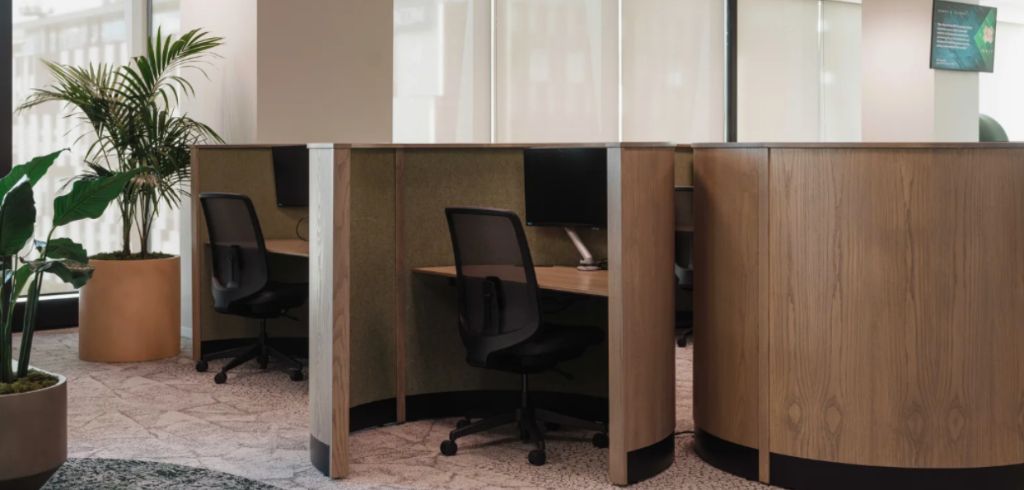
Booth
seating is enclosed on multiple sides, usually with a table
fixed between two facing seats. Banquette seating is a
single upholstered bench, usually against a wall, paired
with loose chairs on the open side. Booths suit spaces that
want privacy and separation. Banquettes suit spaces that
want flexibility and flow.
Whichever format ends up on
the floor, both are ultimately doing the same job: giving
people a reason to sit down together to connect. At Harrows,
we design and manufacture custom booth
and banquette seating in-house at our Timaru factory, so
the conversation with a project partner is never just
“which seat”, it’s how the seating should shape the
way people connect in that space.
The Quick Answer:
Choosing Between Booths and Banquettes
Choose a booth
when: you want defined, private zones. Booths work hard in
restaurants, bars and break-out areas where groups want a
sense of enclosure, the kind of space that turns a quick
catch-up into a proper conversation because nobody’s
rushing off.
Choose a banquette when: you need to fit
more covers into a smaller footprint, or want the seating to
adapt to different group sizes. Banquettes are the more
flexible option, since loose chairs can be added, removed or
reconfigured without touching the fixed bench, which matters
when the same room needs to host a solo diner at 3pm and a
table of ten at 8pm.
Where Each Seating Format
Performs Best
Creating Private Zones with Booth
Seating
Advertisement – scroll to continue reading
Booths create their own micro-environment.
The high sides and enclosed table give people a sense of
ownership over their space, which is why they’re a fixture
in hospitality venues built around long, social meals, the
format rewards lingering. They’re considered rather than
incidental. Once a booth is placed, it’s placed for good,
so they suit fitouts with a settled floor plan. Because
Harrows manufactures the frame, joinery and upholstery under
one roof, we can build booth seating and its table as a
single specified piece, rather than sourcing the two
separately and hoping they match.
Maximising Space
and Flexibility with Banquettes
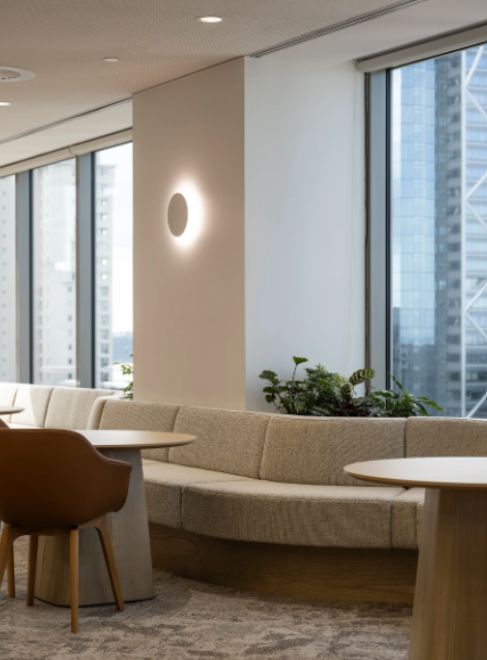
Banquettes are the
better fit for spaces that need to work harder. A single run
of banquette seating along a wall can serve a two-top on a
quiet Tuesday and a twelve-top on a Saturday night, just by
adjusting the chairs on the open side. That adaptability is
why banquettes show up as often in workplace
break-out areas as they do in hospitality; they let a
room reshape itself around whatever social configuration
people need that day, from a one-on-one conversation to a
full team huddle. Harrows builds banquette runs to custom
lengths, so the bench can follow the actual shape of a room
rather than the room being designed around a standard
unit.
Frequently
Asked Questions
Do booths or banquettes cost
more?
It depends on scale and materials, not seating
type. A banquette run typically uses less joinery per seat,
but a booth includes its own table, so total spend evens out
across most commercial
fitouts. Because Harrows manufactures locally in Timaru,
lead times and warranty terms stay consistent across either
format, you’re not trading cost certainty for
flexibility.
Can banquette seating be built to a
custom length?
Yes. Banquettes are one of the more
flexible seating formats to specify, since the bench length,
back height and upholstery can all be adjusted to fit the
space. Our in-house team can take a floor plan and turn it
into a bench that fits the wall it’s going against, not
the other way around.
Which is better for workplace
social spaces?
Banquettes, in most cases. Workplace
break-out areas need to flex between a quick one-on-one and
a full team huddle, and banquette seating with movable
chairs handles that shift better than a fixed booth. These
are the spaces where a lot of a team’s actual connection
happens, the conversations that don’t fit neatly into a
meeting room so the seating needs to get out of the way and
let that happen.
Do both need to be
upholstered?
Not necessarily, but upholstery is where
most of the comfort and durability decisions get made.
Commercial-grade fabric and foam density matter more for how
the seat performs over years of daily use than whether
it’s a booth or a banquette. Harrows specifies and
upholsters to commercial-use standards as part of the same
build, backed by our warranty, so durability isn’t a
separate conversation from design.
Choosing the Right
Commercial Seating Solution
The Bigger
Picture
Neither format is inherently better. The
right choice comes down to how people are meant to use the
space: whether you’re designing for an enclosed, private
gathering, or for a room that needs to reshape itself
throughout the day. Underneath both is the same goal,
seating that gets people to sit down, stay a while, and
actually talk to each other, whether that’s over a long
dinner or a five-minute chat in the break-out
area.
That’s the same question behind every seating
decision we make with our project partners, whichever format
ends up on the floor, and with more than 30 years of
manufacturing experience and a skilled workforce building
both formats in Timaru, it’s a question we’re set up to
answer either way.
Ready to find the right seating
setup for your next project? Talk to Harrows about
custom booth and banquette solutions built for your
space.