

The platform combines artificial intelligence and
molecular modeling tools to enable early-stage development
of drug candidates — from design hypotheses to the
selection of molecules for synthesis and biological
testing.
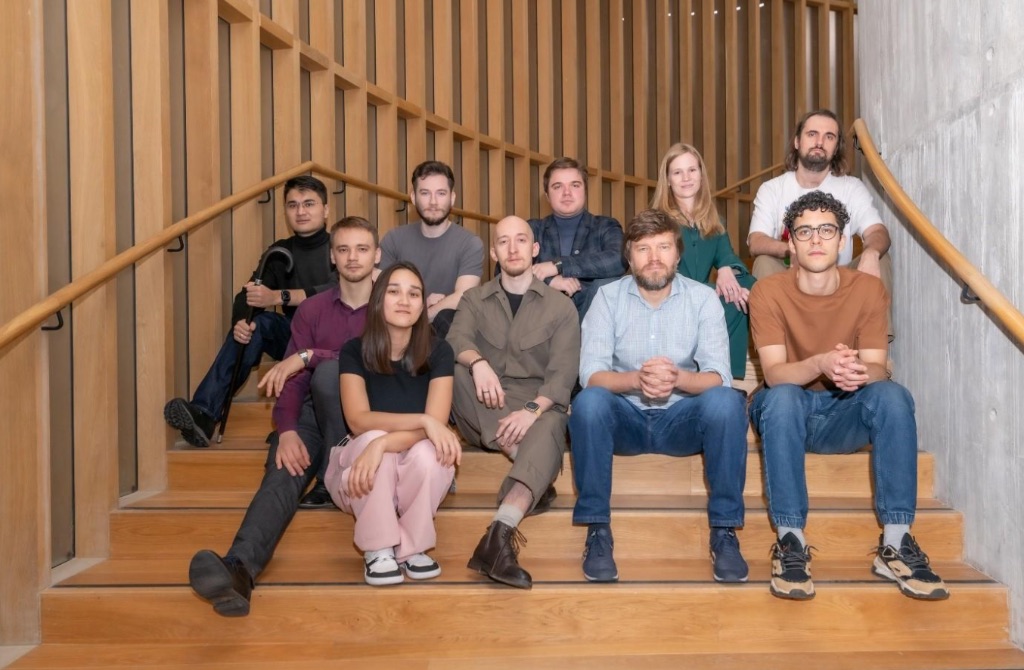
The Russian startup Ligand Pro, founded by
professors and a PhD student from Skoltech (part of the
VEB.RF group), has introduced a platform for drug molecule
development that uses artificial intelligence and molecular
modeling methods. The solution brings together molecular
design, computational experiments, and analysis of their
results in a single digital environment.
Ligand Pro. Photo/Supplied.
The
platform is designed for the computational stage of early
drug development. With its help, researchers can formulate
and test molecular design hypotheses, generate and optimize
structures, predict their interaction with the target
protein, assess physicochemical properties and structural
risks, and analyze the patent landscape and synthetic
accessibility of compounds. After a series of calculations,
the user can create a shortlist of the most promising
molecules for subsequent synthesis and experimental
testing.
“This is the first in Russia platform that
combines AI and molecular modeling tools in a single
environment for the full computational cycle of early drug
development. With the platform, we are making advanced AI
tools accessible to pharmaceutical companies and research
teams so they can accelerate the development of new drug
molecules, improve the efficiency of computational
experiments, and move faster from hypotheses to promising
candidate molecules,” said Marina Pak, co-founder and CEO
of Ligand Pro, a graduate of Skoltech’s MSc and PhD
programs.
Advertisement – scroll to continue reading
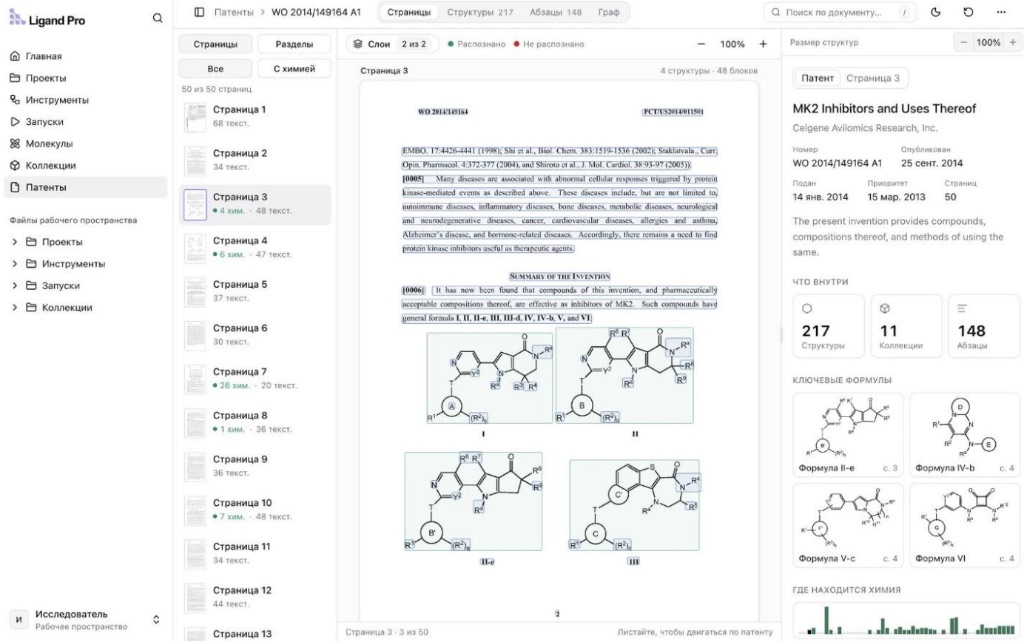
Unlike standalone computational services,
Ligand Pro is organized as a working environment for drug
development projects. In it, molecules, protein targets,
compound collections, design hypotheses, and calculation
results are interconnected. This allows researchers not only
to run individual models but also to preserve the logic of
decision-making across multiple cycles of molecular
design.
Ligand Pro. Photo/Supplied.
“Today
many teams use separate programs for different stages of
development: one tool for docking, another for property
prediction, a third for generating or analyzing molecules.
The results have to be manually combined and interpreted,
and the context of why a particular structure was created
often remains outside the computational system. We wanted to
build not a catalog of online tools but a unified molecular
design environment. In Ligand Pro, a researcher can
formulate a hypothesis, link a series of molecules to it,
test it through calculations, and then select candidates
based on the combined data,” said Sergey Nikolenko, head
of chemoinformatics at Ligand Pro.
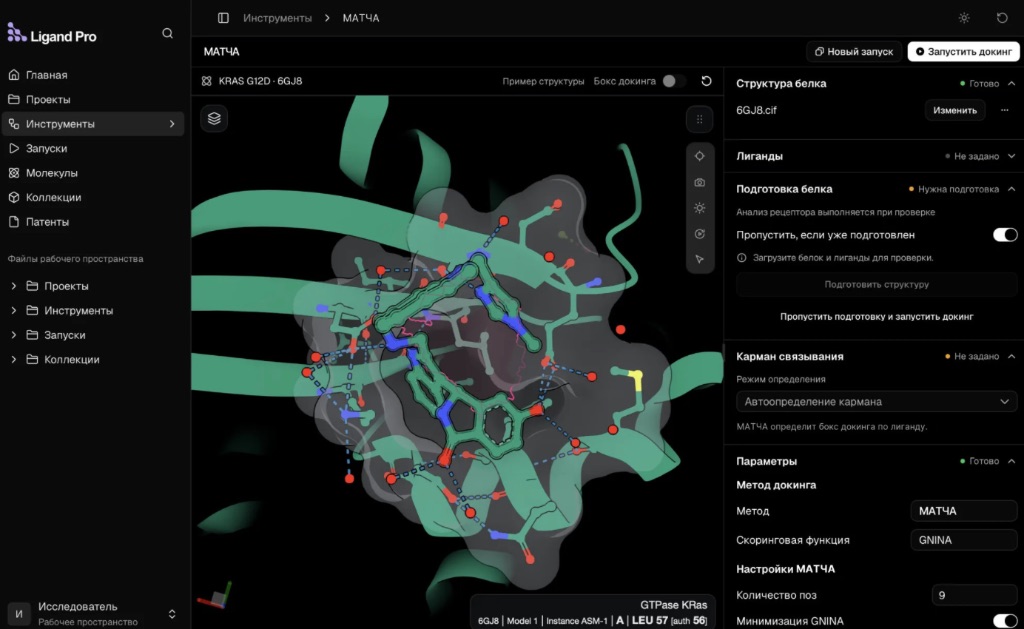
The platform offers
modern AI and molecular modeling tools for early-stage drug
development tasks. These include generative models for
creating and optimizing new chemical structures,
retrosynthetic analysis tools, calculation of molecular
descriptors and structural alerts, and the flagship Matcha
program — a highly accurate and fast AI-based molecular
docking tool that predicts the position of a small molecule
in a complex with a target protein.
Ligand Pro. Photo/Supplied.
The
platform is intended primarily for specialists in medicinal
and computational chemistry, as well as research teams at
pharmaceutical companies and academic organizations working
on the discovery and optimization of bioactive
compounds.
Ligand Pro is currently in closed beta
testing. Representatives of pharmaceutical companies and
academic teams involved in drug molecule design are joining
the platform. At this stage, the team is gathering feedback
on use cases and the interface and continues to add new
computational modules. After testing is complete, access to
the platform is planned to be opened to a wider range of
users.
The platform is available at the Ligand Pro website –
https://platform.ligandpro.ru/
Note:
Skoltech
is a private international university (part of the VEB.RF
group) in Russia, cultivating a new generation of leaders in
technology, science, and business. As a factory of
technologies, it conducts research in breakthrough fields
and promotes technological innovation to solve critical
problems that face Russia and the world. Skoltech focuses on
six priority areas: life sciences, health, and agro;
telecommunications, photonics, and quantum technologies;
artificial intelligence; advanced materials and engineering;
energy efficiency and the energy transition; and advanced
studies. Established in 2011 in collaboration with the
Massachusetts Institute of Technology (MIT), Skoltech was
listed among the world’s top 100 young universities by the
Nature Index in its both editions (2019, 2021). On
Research.com, the Institute ranks as Russian university No.
2 overall and No. 1 for genetics. In the recent SCImago
Institutions Rankings, Skoltech placed first nationwide for
computer science. Website: https://www.skoltech.ru/.