


Meridian
Energy Limited has released its monthly operating report for
the month of September 2026.
“Despite mild weather
during September, we continue to have inflows and lake
storage that are well above historical averages,” says
Chief Executive Mike Roan.
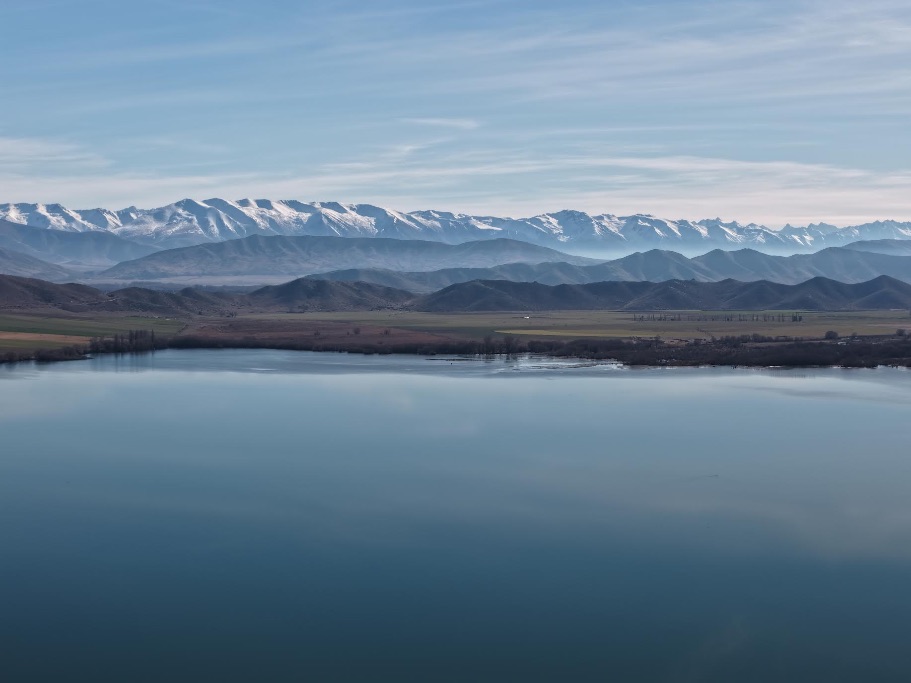
Benmore. Photo credit: Jack Zorab.
Photo/Supplied.
“These factors
enabled us to maintain high levels of hydro generation,
lifting our overall generation for the first quarter of a
financial year to a record level. It was also pleasing to
see a return to growth in customer numbers, while we have
now migrated more than half of all our customers onto the
Kraken platform.”
Meridian’s revised total capital
expenditure guidance for the 2027 financial year is
unchanged at $370 million to $410 million. Stay in business
capital expenditure is expected to be between $110 million
and $120 million, growth capital expenditure is expected to
be between $220 million and $250 million, and repowering
capital expenditure is expected to be $40
million.
Call this afternoon with Mandy Binnie and
Owen Hackston
Mandy Binnie (CFO) and Owen Hackston
(Investor Relations Manager) will host a quarterly operating
result call via a Microsoft Teams Live event today, Tuesday
20 October at 2.30pm NZDT (12.30pm AEDT).
Advertisement – scroll to continue reading
Click on the
link below at this time to join the call:
Meridian
Energy Quarterly Operating results – Microsoft Teams Live
Event
Please submit any questions using
the Q&A panel on the right-hand side of the call window.
If the Q&A panel doesn’t automatically appear, please
select the small ‘Q&A’ speech bubble.
Key points
from September Operating Report
- In the month to
12 October, national hydro storage decreased from
155% to 121% of historical
average. - South Island storage decreased to
133% of average and North Island storage
decreased to 78% of average by 12 October
2026. - Meridian’s September 2026 monthly total
inflows were 150% of historical
average. - Meridian’s Waitaki catchment water
storage at the end of September 2026 was
183% of historical average. - Snow
storage in Meridian’s Waitaki catchment was
102% of average in early
October. - Water storage in Meridian’s Waiau
catchment was 133% of average at the end of
September 2026. - September was a mild month with
temperatures above or near average for the whole country.
Rainfall was above normal for much of the South Island,
whereas most of the North Island had below normal
rainfall. - National electricity demand in September
2026 was 0.5% lower than September
2025. - NZAS average load during September 2026 was
578MW, compared with 571MW a year
ago. - Meridian’s retail sales volumes in September
2026 were 6.4% lower than September
2025. - Compared to September 2025, segment sales in
residential were 9.4% lower, small medium business 11.7%
higher, agriculture 21.4% lower, large business 9.2% higher
and corporate 10.6% lower. - Total customer
connections increased slightly in September. Over 245,000
customers have now been migrated onto the Kraken
platform.
Key points this quarter
include:
- Q1 total inflows were
154% of historical average and
29% higher than Q1 last
year. - Meridian’s Waitaki catchment water
storage at the end of Q1 was 100.3% higher
than Q1 last year. - Compared to Q1 last year,
Meridian’s generation was 18.9% higher at
a 64.3% lower average
price. - While nearer term electricity futures
prices decreased during Q1, 2028-2029 quarterly prices
firmed slightly. 2030 futures began trading at the start of
October and are currently priced slightly higher than
2029. - National electricity demand in Q1 was
0.4% higher than Q1 last year. Excluding
NZAS demand, Q1 demand is 0.2% higher than
Q1 last year, when Meridian and NZAS had agreed a 50MW
demand response reduction for Winter 2025 (to August
2025). - Winter 2026 was New Zealand’s 3rd warmest
winter on record. While northern areas experienced near
average temperatures, the rest of the country saw a
relatively warm winter, particularly the South Island. The
North Island had a drier than usual winter, in contrast to
the South Island, which was significantly wetter than
normal. El Niño conditions were present in the tropical
Pacific atmosphere and ocean and strengthened considerably
from mid-winter onwards. - At the end of Q1,
Meridian’s customer numbers were 0.9%
lower than at the same time last year. - Compared to
Q1 last year, Meridian’s retail sales volumes were
3.0% lower, with decreases in agricultural
and corporate, offset slightly by increases in residential,
small business and large business at a 1.1%
higher average price. - Compared to Q1 last year,
total operating costs were 1.1% higher
and total capital expenditure was 93.9%
higher.
Weekly lake storage updates are
available on Meridian’s website. See comparative lake
levels at: www.meridianenergy.co.nz/power-stations/lake-levels
Note: